
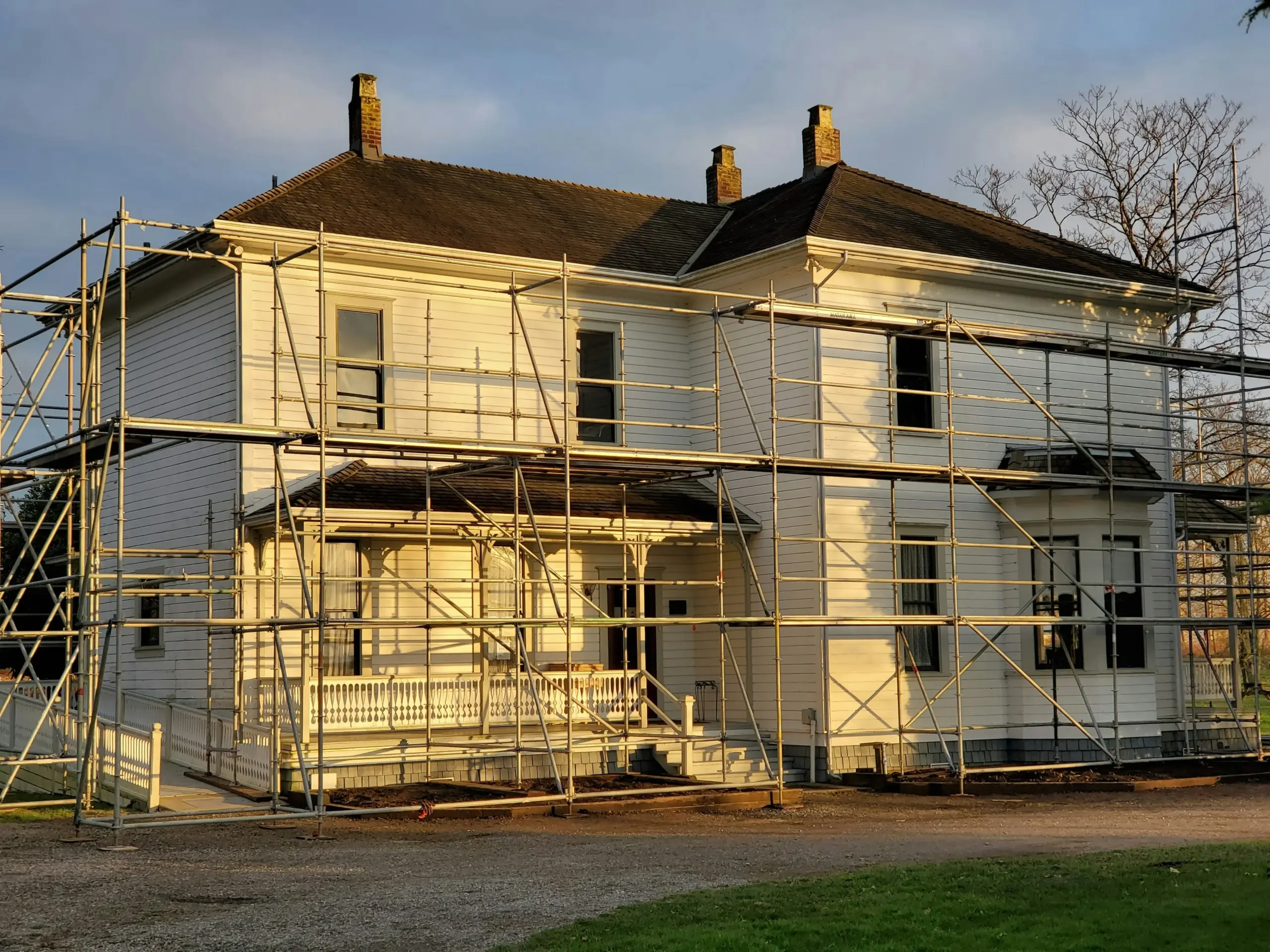
There is something special about the houses in Old Lévis. These two-slope buildings, with their wood siding, their casement windows and their stone foundations, tell over 100 years of history. For the owners who live in them, it is both a pride and a responsibility.
Renovating a heritage house is different from an ordinary renovation. The materials are old, the structures have shifted, and the Quebec climate, with its long winters and freeze-thaw cycles, has not been kind. Every intervention must be carefully considered, because a bad decision can erase in a few weeks what generations have preserved.
The economic context is also there: residential renovation spending in Quebec reached 25 to 30 billion dollars in 2025 (reasonable estimate based on industry trends). A growing share of these investments affects properties over 50 years old, where the needs are real, and where expertise makes all the difference.
Why renovating a heritage house requires a different approach
A heritage house is not renovated with the same reflexes as a 1990s bungalow. Period materials have their own performance logic. The structure has a history. And in areas like Old Lévis, there is also a regulatory dimension to respect.
This is not a constraint, it is a reality. And owners who approach this type of project with that understanding avoid a lot of frustration and budget overruns.
What we often see on the ground is well-intentioned owners who choose modern materials incompatible with the existing structure, or who entrust the work to a contractor accustomed to new construction. The result is water infiltration, moisture problems, or a house that has lost its character without gaining in durability.
The characteristics of Quebec's heritage houses
The heritage houses of the Lévis-Quebec area share several distinctive traits. Wood siding, often in pine or cedar, was cut to last, and when well maintained, it can hold up 100 to 150 years in the Quebec climate. The roofs with pronounced two slopes allow natural snow evacuation. Stone foundations, although robust, are sensitive to ground movement and infiltration.
Inside, the moldings, woodwork and paneling tell of the artisanal craftsmanship of the era. It is these elements that give these houses their value, both heritage and real estate.
Casement windows, solid wood floors, staircases with ornate railings: every detail has an architectural logic. Replacing them with generic modern equivalents often means losing more than you gain.
The risks of a poorly adapted renovation
The main risk is the loss of authenticity. Once you cover a century-old wood siding with vinyl, or replace small-paned windows with standard PVC, the character of the house disappears, and it does not come back.
But beyond aesthetics, there are real structural risks. Modern insulation poorly installed in an old structure can block water vapor and cause condensation in the walls. A Portland cement-based mortar applied to traditional stone foundations can crack the stones themselves, because the expansion coefficients are not compatible.
These are mistakes that can be avoided, but only if you understand how these houses were built.
Have your heritage house evaluated before starting anything. Request a free on-site inspection, we come to analyze the real condition of your property and explain what can be restored, what must be replaced, and how to do it by the rules.
The standards and permits for renovating in a heritage area
Before touching anything on a heritage house in an area like Old Lévis, you need to know what you are getting into on the regulatory front. It is not complicated, but it requires being prepared.
Municipalities that have protected heritage areas have specific regulations on what can be modified, replaced or added. The goal is not to block renovations, but to ensure that interventions respect the character of the surrounding built environment.
An owner who starts work without the required permits can end up undoing what they just did, and paying twice.
The municipal rules to respect
In heritage areas, the City of Lévis, like other cities in Quebec, requires specific permits for work affecting the exterior envelope of a building. This includes replacing siding, modifying openings, changing the roof and sometimes even the color of the exterior paint.
These permits assess the architectural compatibility of the project with the area. In practice, this means you cannot install just any material without justification. The choices must fit into the visual and historical continuity of the neighborhood.
The good news: a contractor who knows these requirements can guide you through the application process and ensure that the planned work will be approved before starting.
The importance of an RBQ-certified contractor
Working on a heritage house without a licensed contractor means taking a risk on two fronts: the quality of the work, and your legal protection.
Regulatory compliance
Part 10 of the Quebec Construction Code specifically governs work on existing buildings. It establishes technical requirements for the conservation, restoration and transformation of structures in place. A contractor holding a valid RBQ license has demonstrated knowledge of these standards and is required to comply with them.
The Régie du bâtiment du Québec (RBQ) oversees this compliance. In the event of non-compliant work, it is the owner who bears the consequences, and not the unlicensed contractor who often has no possible recourse against them.
Our RBQ license 5811-7821-01 is public and verifiable. We encourage you to verify any contractor's license before signing anything.
Do you have a project in mind and want to know if it's feasible under current regulations? Contact us for a free consultation, we explain the steps and permits required for your area.
The key steps to a successful heritage renovation
A well-executed heritage renovation follows a precise logic. You don't start with the finishes, you start from the structure and work your way up to the surface.
Analysis of the existing structure
Before choosing materials or planning work, we inspect what isn't visible. Stone foundations: are there cracks? Signs of infiltration? The solid wood framing: are there signs of rot or mold? The floor joists : have they been affected by moisture over the years?
In the Lévis-Québec area homes that are 80, 100 or 120 years old, we regularly find surprises at this stage. That's no reason to panic, it's precisely why we do the inspection first. Addressing a structural problem before installing new finishes is the only way to ensure the work will last.
Choosing compatible materials
This is where we make a real difference between a serious heritage renovation and an ordinary renovation dressed up in old wood.
For an ancestral home, materials must be compatible with the original ones, not just aesthetically, but technically. Lime mortar, for example, is much more appropriate than cement mortar for old foundations and masonry. It is more flexible, it breathes, and it doesn't damage the stone through freeze-thaw cycles.
Standing seam metal roofing, used on many ancestral Québec roofs, offers exceptional durability while respecting the traditional appearance. Solid wood for siding, properly treated, withstands the weather and ages well in our climate.
These materials sometimes cost more in the short term. But they last, and they preserve the property's value.
Restoring architectural elements
Moldings, wainscoting, casement windows and interior woodwork are often salvageable, even when they appear to be in poor condition. A good craftsman can restore what exists rather than replacing everything.
Casement windows, for example, can be refurbished, reworked to improve weathertightness, and kept in their original format and profile. The result is often better, visually and technically, than a replacement with a modern window incompatible with the facade's proportions.
Same thing for staircases, railings, baseboards and cornices. It's these details that distinguish a restored home from a simply renovated one.
Are you ready to start your project? Request a free quote, we come evaluate your property on site and propose a plan adapted to its history and its actual condition.
How much does renovating an ancestral home in Québec cost?
The budget question is legitimate, and the honest answer is that these projects generally cost more than a standard renovation. Not because it's unfair, but because the work is more complex and the materials, more carefully chosen.
The average cost of a heritage renovation in Québec is around 34 000 $ (reasonable estimate based on current projects in the area). For a truly authentic restoration, with period materials and particular attention to architectural details, plan for a budget 20 to 50 % higher than an ordinary renovation of the same area.
What this includes: specialized materials, qualified labor, additional time related to analysis and restoration, and sometimes permit costs specific to heritage areas.
Grants available for old buildings
Several financial assistance programs exist in Québec for owners of heritage buildings. Some municipalities, including Lévis, offer specific grants for restoring facades and architectural elements in historic areas. Provincial programs can cover 50 to 70 % of costs for certain eligible work.
These programs change regularly. We advise you to check with your municipality and the Ministry of Culture before starting, and a local contractor who knows these programs can help you identify what you're entitled to.
Why costs are often underestimated
It's a reality we often see on our job sites. About 40 % of owners underestimate their initial budget (reasonable estimate based on field experience). Not because they aren't serious, but because an old house always hides what you can't see before opening the walls.
A wood wall that looks sound can hide moisture. Stone foundations that appear stable can have cracks invisible from the outside. That's why a serious inspection before the quote is essential, and not just a quick glance.
How the Québec climate influences heritage renovations
Québec is one of the most demanding places in the world to renovate, climatically speaking. The ancestral homes of Lévis and the Québec City region have survived generations of this climate, but they need adapted care to continue doing so.
Freeze-thaw and material durability
Freeze-thaw cycles are particularly aggressive for old structures. When water infiltrates stone foundations or masonry joints and freezes, it expands. This repeated movement, year after year, creates cracks that gradually widen.
That's why the choice of mortar, caulking and waterproofing membranes is also important in a heritage renovation. You don't fill a crack in a stone foundation with modern Portland cement and forget about it. You choose compatible materials, treat properly, and ensure that runoff water is well managed around the building.
Moisture is also a constant factor. Ancestral homes were not built with the vapor barriers we use today, and this is often intentional. These structures «breathe.» Blocking their vapor with poorly chosen modern insulation can create more problems than it solves.
Traditional roofs adapted to snow
The gable roofs of ancestral Quebec homes are not an aesthetic coincidence. Their steep slope is a direct response to the climate: it allows snow to slide off naturally, avoiding structural overloads.
When restoring or replacing a roof on an ancestral home, this logic must be respected. Standing seam metal roofing, used for generations in the Lévis and Quebec City region, remains one of the most suitable coverings for our climatic conditions. It lasts, it handles snow and ice well, and it fits naturally into the aesthetic of period homes.
Myths and realities about ancestral homes
Several misconceptions circulate about old homes. We hear them often, and we prefer to correct them before they influence bad decisions.
Myth: Everything must be demolished to modernize
This is false. And it is often the worst thing to do. The value of an ancestral home lies precisely in its original elements, the structure, the materials, the architectural details. Demolishing everything to rebuild from scratch destroys what makes the property unique, and often what gives it the most value on the real estate market.
Restoration preserves authenticity while integrating targeted improvements where necessary: insulation, plumbing, electrical, windows. We modernize without erasing.
Myth: Old homes are impossible to insulate
This is not true either. You have to insulate differently, and do so while respecting the construction logic of the era, but energy improvements of 20 to 30 % are entirely achievable without compromising the integrity of the structure. Interior insulation, weatherstripping on windows, well-done caulking: there is room for improvement.
The key is not to force a modern solution into an old building without understanding how it manages vapor and humidity. That's where problems happen.
Myth: Heritage renovations are always overpriced
It depends on the scope of the project. With good planning, well-chosen materials and available subsidies, many heritage projects are entirely financially viable. What's expensive isn't well-planned heritage renovations, it's poorly planned renovations, whether heritage or not.
Why choose Solutions Rénovation Québec for your heritage project
We won't pretend that everyone can do this work. Ancestral homes require an understanding of traditional materials, adapted restoration techniques, and knowledge of the regulations in force in heritage sectors.
RBQ contractor specialized in residential renovation
SRQ is a residential renovation company based in Lévis, holding the RBQ license 5811-7821-01. All our work complies with the requirements of the Québec Construction Code, including Part 10 applicable to existing buildings. We work rigorously, not because it's an obligation, but because it's the only way to do things right.
Expertise in old homes in the Lévis-Québec area
With more than 500 completed projects and over 10 years of combined experience, we have worked on properties of all ages in the Lévis, Québec, la Beauce and Chaudière-Appalaches region. We know the challenges of homes built before 1960, the humidity pitfalls in old structures, and the materials that really work in our climate.
We choose adapted materials, treated wood siding, standing seam metal roofing, lime mortar, compatible windows, because that's what preserves authenticity while ensuring durability.
A simple and transparent process
Here's how we work with you:
- Free visit and quote, no obligation
- Detailed planning with clear schedule and budget
- Clean, organized and safe worksite
- Final delivery with complete inspection
No hidden fees. No surprises along the way. And a guarantee of 5 years on labor on all our projects.
Your ancestral home deserves a serious approach. Request a free quote or call us at 418-476-1747, Monday to Friday, from 8 a.m. to 5 p.m.
FAQ: Ancestral home renovation in Québec
Can an ancestral home be modernized without losing its character?
Yes, absolutely. The key is to intervene in a targeted way: modernize what affects comfort and performance (insulation, plumbing, electricity) without touching the architectural elements that define the home's character. Moldings, casement windows, wood paneling, solid wood floors, all of this can be restored and highlighted rather than replaced. A well-restored ancestral home keeps its authenticity and gains in livability.
Is a permit required to renovate in a heritage sector?
In most cases, yes, especially for work affecting the exterior envelope. Siding replacement, modification of openings, roof changes: these interventions generally require a specific permit in heritage-regulated sectors. The municipality evaluates whether the proposed materials and forms are compatible with the sector. A contractor familiar with these requirements can help you prepare the application and avoid refusals.
How much does a heritage renovation cost in Québec?
The average cost is around 34 000 $ for a heritage renovation project (reasonable estimate). For a complete restoration with period materials, the budget can be 20 to 50 % higher than a standard renovation of the same area. That said, subsidies available for heritage buildings can significantly reduce the bill. An on-site quote will give you a precise figure for your situation.
Are old homes less energy efficient?
They can be, but they aren't necessarily. With well-targeted interventions, energy improvements of 20 to 30 % are achievable without compromising the structure. The important thing is not to force modern solutions incompatible with the way these homes manage water vapor. Poorly installed insulation in an old structure can create more damage than it solves.
What materials should be used to respect authenticity?
Materials must be compatible with the original ones, technically and visually. For the exterior: solid wood siding (pine, cedar), standing seam metal roofing, lime mortar for masonry. For the interior: solid wood for woodwork and floors, low-VOC paints. Material selection is done on a case-by-case basis according to the condition of each property, which is why an on-site visit is essential.
Do heritage renovations increase the value of the home?
Yes, measurably. A well-restored ancestral home that retains its original architectural elements while being modernized at the systems level can see its real estate value increase by 10 to 15 % (reasonable estimate). And in sought-after historic sectors like Vieux-Lévis, demand for this type of property remains strong. A well-done heritage renovation is a long-term investment.
How long does this type of renovation take?
It varies greatly depending on the scope of the project. An exterior restoration project (siding, roofing, windows) can take 4 to 8 weeks. A complete renovation, which includes the structure, the envelope and the interiors, can stretch over 3 to 6 months. Heritage permits and delivery times for specialized materials must also be integrated into the planning. We always discuss this schedule in detail during the quote.
Can subsidies be received for this work?
Yes, programs exist. Some municipalities in Quebec, including Lévis, have specific assistance programs for facade restoration in heritage sectors. Provincial programs can cover 50 to 70 % of eligible costs for certain types of work. These programs change regularly; check with your municipality and the Ministry of Culture and Communications before starting your project. We can also help you navigate these procedures.
Solutions Rénovation Québec (SRQ), RBQ-certified general contractor RBQ license: 5811-7821-01 2552 chemin du Fleuve, Lévis, Québec, G6W 1Y3 Tel.: 418-476-1747 | renovationsolutionsquebec.ca Areas served: Lévis, Québec, Beauce, Chaudière-Appalaches, Centre-du-Québec, Mauricie, Estrie