
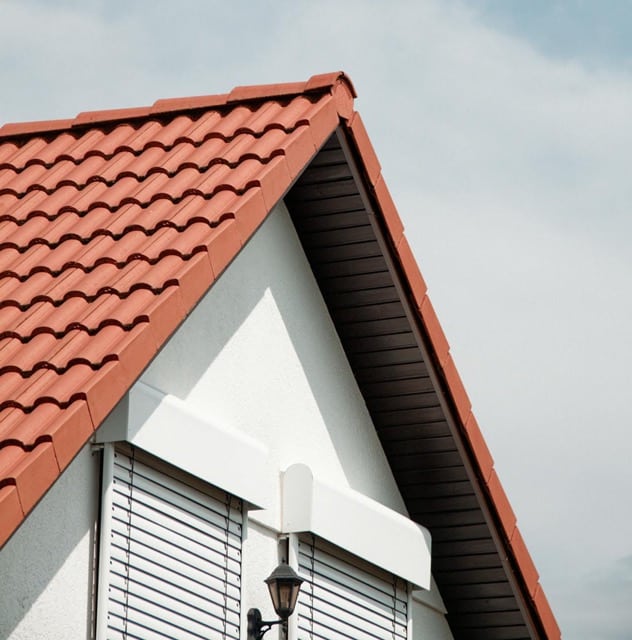
If you have to re-roof in Lévis, you're probably asking yourself this question: do I keep the same type of roof, or do I change to something more durable?
It's an important decision. Your roof is your first line of defense against our climate. Rain, snow, ice, freeze-thaw - it takes it all in for years. If you make the wrong choice, you'll end up with infiltration problems, costly repairs, and maybe even having to re-roof well before the end of its normal useful life.
In Lévis, with our harsh winters and constant freeze-thaw cycles, the type of roof you choose has a direct impact on its longevity. Flat roofs and pitched roofs each have their advantages and limitations in our climate.
The question isn't just “which one looks better” or “which one costs less up front”. It's “which one will last the longest with the fewest problems”.
Understanding the sustainability of roofs in Quebec
Our climate is hard on roofs. Between 50 and 100 freeze-thaw cycles per year (a reasonable estimate based on climate data for the Quebec City region), plus snow accumulation, plus heavy rain in spring and fall, our roofs work hard.
A roof that lasts 30 years in California may only last 15 or 20 years here. That's why we have to choose the right type of roof for our reality, not for an American building catalog.
Pitched roofs: benefits and longevity
Pitched roofs - those with a pitch of 4:12 or more - are the traditional standard in Quebec for a good reason: they work well in our climate.
The main advantage of a pitched roof is natural drainage. Snow slides off, water runs off, leaves fall off. There's no accumulation that stays there for weeks. This greatly reduces stress on the structure and materials.
Service life depending on materials :
Asphalt shingles 15 to 25 years in our climate. It's the most common material, affordable and easy to install. However, freeze-thaw cycles and UV exposure gradually reduce their watertightness.
Sheet metal 40 to 60 years, sometimes even longer. Sheet metal is very weather-resistant, it doesn't rot, and snow slides off easily. It's more expensive initially, but the long-term ROI is excellent.
Cedar shingles 20 to 30 years with regular maintenance. Less common today because of maintenance requirements and costs, but very durable if well maintained.
Sloped roofs are also more wind-resistant. In Lévis, we regularly experience strong winds, especially in winter and spring. A well-installed roof with the right slope is much more resistant than a flat roof.
The other often underestimated advantage: ventilation. A pitched roof allows you to install a passive ventilation system (soffits + ridge vent) that keeps the attic dry and prevents condensation. We've talked about this in our other articles, but it's crucial to the durability of your entire structure.
Flat roofs: advantages and limitations
Flat roofs - or rather, low-slope roofs, because there's no such thing as a true flat roof - are popular for commercial buildings, modern condos and some contemporary homes.
Service life depending on membrane :
EPDM (rubber) 20 to 30 years. Resistant membrane, flexible with thermal movements, relatively affordable. Sensitive to perforation and requires regular maintenance.
TPO (thermoplastic) 25 to 35 years. Newer than EPDM, UV and chemical resistant. Increasingly popular for flat residential roofs.
Elastomer membrane Age: 30 to 40 years. Highly resistant, often used in Quebec. More expensive, but durable.
The main advantage of a flat roof is the space you can use. You can build a roof terrace, install solar panels more easily, or simply gain living space underneath.
On the other hand, flat roofs have significant limitations in our climate. Drainage is the number-one challenge. Even with a minimum slope of 1 to 2 %, water and snow accumulate. If drainage is blocked by leaves, ice or debris, water stagnates. Stagnant water always causes problems.
The maintenance required for a flat roof is also much more demanding than for a pitched roof. Drains need to be inspected at least twice a year, debris removed regularly, and snow often removed manually after major storms to prevent overloading.
Impact of Lévis climate on longevity
Our climate is probably the most important factor when comparing flat and pitched roofs. What works well in Arizona or North Carolina doesn't necessarily work well here.
In Lévis, we have long winters with lots of snow, constant freeze-thaw cycles between October and April, abundant rain in spring, and hot summers that make materials work.
Risks specific to flat roofs
Flat roofs suffer particularly in our climate for three main reasons.
Snow accumulation and overloading : A storm can deposit 30, 40, 50 cm of snow on your roof. On a sloped roof, some of it slides off naturally. On a flat roof, it stays there until you shovel it or it melts.
Wet snow is heavy. Very heavy. If you accumulate several storms without plowing, you can end up with a dangerous overload. We've seen flat roofs collapse in Lévis after particularly snowy winters.
Water accumulation and freeze-thaw The worst enemy of a flat roof is the water that gets trapped in the lower areas. With our freeze-thaw cycles, this water freezes, thaws and refreezes. Eventually, it cracks the membrane, loosens the joints and causes infiltration.
According to our field experience, around 20 to 30 % of poorly maintained flat roofs develop infiltration problems within the first 10 years (a reasonable estimate). Most of these problems stem from blocked drains or insufficient slopes.
Safety during maintenance Climbing on a flat roof in winter to shovel or inspect is dangerous. Ice, snow, unprotected edges. Accidents happen more often than you think.
The Quebec Construction Code now requires a minimum slope for all residential flat roofs - typically 1 % minimum (1/8" per foot), and 2 % is recommended to ensure adequate drainage.
Climate benefits of pitched roofs
Sloped roofs manage our climate much better. Water runs off naturally into the gutters. Snow slides off gradually, or at least accumulates more evenly without creating localized overloads.
Freeze-thaw cycles affect pitched roofs less because there's less standing water. Shingles or sheet metal dry quickly after rain or melt.
Wind resistance is also improved. A properly installed pitched roof with shingles nailed to RBQ standards can withstand winds of 150 km/h or more. This is important in Lévis, where we regularly experience strong winds in winter.
Costs and ROI for flat vs. pitched roofs
Initial cost and long-term cost are not the same thing. A cheaper roof can end up costing more if it requires a lot of maintenance or lasts less time.
Here's what we're seeing on our projects in Lévis and the Chaudière-Appalaches region.
Sloped roof cost estimate
Asphalt shingles The cost: 6 to 12 $ per square foot installed, depending on the quality of the shingles and the complexity of the roof. For an average home with 1,200 to 1,500 square feet of roof surface, you're looking at between 7,000 $ and 18,000 $.
Sheet metal 12 to 18 $ per square foot installed. More expensive initially, but with a lifespan of 40 to 60 years, the cost per year is often lower than shingles. For the same house, count between 14,000 $ and 27,000 $.
Maintenance of a pitched roof is minimal. Annual inspection, gutter cleaning, occasional replacement of damaged shingles. Annual budget: 200 to 500 $ per year on average (reasonable estimate).
Flat roof cost estimate
EPDM or TPO membrane The cost: 11 to 21 $ per square foot installed, depending on membrane thickness and complexity of drains and projections. For a typical area of 1,000 to 1,200 square feet, count between 11,000 $ and 25,000 $.
Elastomer membrane 15 to 25 $ per square foot. More durable, but also more expensive. For the same surface area, between 15,000 $ and 30,000 $.
Maintaining a flat roof is more expensive. Twice-yearly inspection, drain cleaning, occasional snow removal in winter, repair of small cracks. Annual budget: 500 to 1,000 $ per year (reasonable estimate).
Over 25 years, a pitched shingle roof will cost you approximately 12,000 $ to 18,000 $ upfront + 5,000 $ to 12,000 $ in maintenance =. 17,000 $ to 30,000 $ total.
A flat TPO membrane roof will cost you around 15,000 $ to 25,000 $ initial + 12,000 $ to 25,000 $ maintenance =. 27,000 $ to 50,000 $ total.
These figures vary according to many factors, but they give you an idea of the real long-term cost.
Free estimate of the type of roofing best suited to your home in Lévis
Consultation with Solutions Rénovation Québec - no obligation
Myths and realities about roofing in Quebec
There are many misconceptions about flat and pitched roofs. Here's what we really see in the field.
Myth: «Flat roofs always leak».»
False. Modern membranes like EPDM and TPO, when properly installed with adequate slope and drainage, can last 25 to 35 years without major leaks.
The problem is that many flat roofs are poorly installed. Insufficient slope, poorly positioned drains, poorly sealed joints. That's what causes leaks.
But a flat roof done properly by a qualified RBQ contractor can be just as watertight as a sloped roof.
Myth: «No need for sloping roofs for modern houses».»
Some people believe that flat roofs are more modern and aesthetically pleasing, and that pitched roofs are outdated.
In fact, in our Quebec climate, pitched roofs remain the most durable and reliable choice for most residential homes. They handle snow, water and wind better, and require less maintenance.
Aesthetics are important, but they should never take precedence over functionality and durability in our climate.
Myth: «Low-maintenance flat roofs».»
Many homeowners think that a flat roof requires almost no maintenance. This is completely untrue.
A flat roof requires regular, rigorous maintenance: inspection twice a year, cleaning of drains and low areas, snow removal after heavy storms, and prompt repair of any cracks or delaminations.
If you neglect maintenance, you're in trouble. Guaranteed.
SRQ solutions for sustainable roofs in Lévis
Whether you opt for a flat or sloped roof, what counts is that the work is done properly, according to RBQ standards, with materials adapted to our climate.
At Solutions Rénovation Québec, we've been installing both types of roof for over 10 years. We know the advantages and limitations of each, and can honestly advise you on the best choice for your home.
SRQ expertise in installation and maintenance
Our RBQ license (5811-7821-01) obliges us to comply with the standards of the Quebec Construction Code. But beyond the obligation, we do things right because we know that our reputation is at stake.
Every SRQ roofing project includes :
- Complete evaluation of your current roof and structure
- Honest recommendation on the type of roofing best suited to your situation
- RBQ-compliant installation with quality materials
- Adequate ventilation (for pitched roofs)
- Correctly dimensioned drainage system (for flat roofs)
- 5-year warranty on labor
- Clean and safe from start to finish
We've completed over 500 home renovation projects in Lévis and the Chaudière-Appalaches region. We know what works in our climate, and we know what causes problems in the medium and long term.
If a flat roof isn't the right solution for your home, we'll tell you straight out. Even if it means losing a contract. Because we'd rather see you satisfied in 10 years than coming back in 5 years with seepage problems.
Benefits for homeowners Lévis
The majority of homes in Lévis have pitched asphalt shingle roofs. They were built between 1960 and 2000, often as bungalows or multi-storey homes.
We know these roofs inside out. We know how they age, where they develop problems and how to repair them properly.
We also know our climate. Harsh winters, constant freeze-thaw cycles, snow accumulation, strong winds. We adapt our methods and materials to this reality.
Request a quote or preventive roof inspection in Lévis
Call us at 418-476-1747 or write to us online
FAQ: Flat and pitched roofs in Lévis
Which roof lasts longer in Lévis: flat or pitched?
In general, a well-installed pitched roof lasts longer in our climate. Asphalt shingles last 15 to 25 years, sheet metal 40 to 60 years. Flat membrane roofs last 20 to 35 years, but require much more maintenance.
Durability depends as much on maintenance as on the type of roof.
Which materials are most resistant to freeze-thaw?
Sheet metal is highly resistant to freeze-thaw cycles. It doesn't crack or retain water, and it adapts well to thermal movements.
Architectural-grade asphalt shingles hold up just as well, especially those reinforced against wind and temperature extremes.
For flat roofs, TPO and elastomer membranes are more resistant to repeated cycles than EPDM.
What annual maintenance is required for each type of roof?
Pitched roof The following services are available: visual inspection once a year, gutter cleaning twice a year, occasional replacement of damaged shingles. Budget: 200 to 500 $ per year.
Flat roof Inspection twice a year, cleaning of drains and surfaces, snow removal as required, repair of minor damage. Budget: 500 to 1,000 $ per year.
Average cost of a new roof in Lévis?
For an average home (1,200 to 1,500 square feet of roof area) :
- Asphalt shingles: 7,000 $ to 18,000 $
- Sheet metal: 14,000 $ to 27,000 $
- Flat membrane (EPDM/TPO): 11,000 $ to 25,000 $
These prices include full installation by an RBQ contractor.
Green roofs: sustainability and energy savings?
Green roofs are gaining in popularity, especially on commercial buildings and condos. They provide excellent insulation, reduce heat islands, and manage rainwater well.
On the other hand, they require a reinforced structure (the soil and plants are heavy), regular maintenance (watering, weeding), and cost much more up front.
For a typical residential home in Lévis, this is rarely the most practical choice.
How does SRQ ensure RBQ and safety compliance?
All our work complies with the Quebec Construction Code and RBQ standards. Our license (5811-7821-01) obliges us to do so, and we offer a 5-year warranty on labor.
We use certified materials, install according to manufacturers' specifications, and comply with all safety regulations on our worksites.
Conclusion: choosing the right roof for your home
There's no universal answer to the question «flat or sloped roof». It depends on your home, your budget, your priorities, and your level of commitment to maintenance.
What's certain is that, in our Quebec climate, a pitched roof generally remains the most durable and reliable choice for residential homes. It handles snow, water and wind better, and requires less long-term maintenance.
Flat roofs have their place, especially on contemporary homes and commercial buildings. But they require rigorous maintenance and a greater investment over their lifetime.
If you need to re-roof in Lévis, take the time to consult an RBQ contractor who can assess your situation and give you honest advice. It can make the difference between a roof that lasts 20 years without a problem and one that gives you headaches in the fifth year.
Schedule your SRQ consultation for sustainable roofing in Lévis today
Call us at 418-476-1747 or visit our website
Solutions Rénovation Québec
2552 chemin du Fleuve, Lévis (Québec) G6W 1Y3
RBQ 5811-7821-01 | 5-year labour warranty