
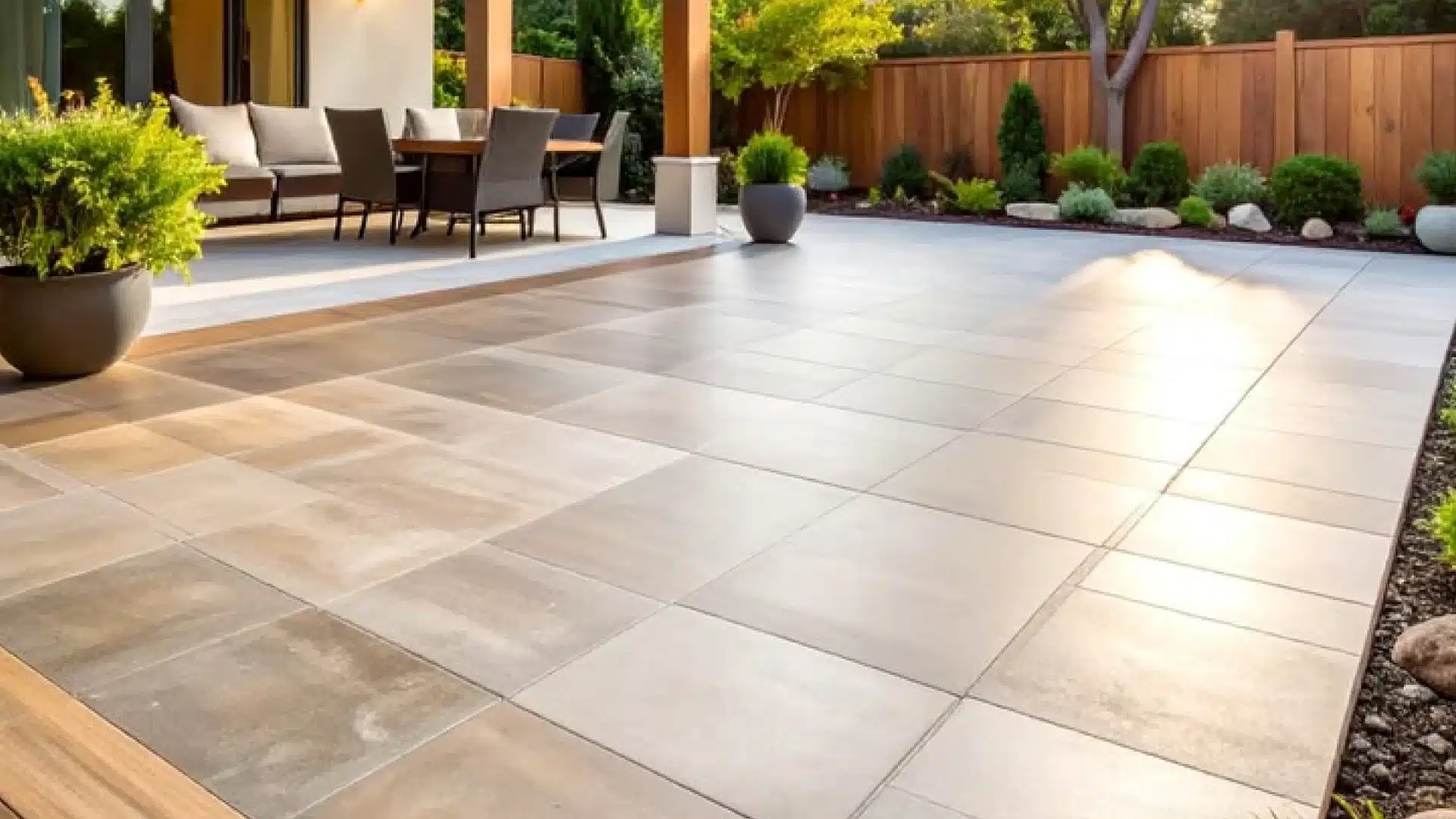
The short answer: yes, in many cases, it's possible. But there's a condition that can't be overlooked — your current deck must be able to support the pergola, and the project must comply with City regulations.
In Saint-Jean-Chrysostome, in the Lévis area, more and more homeowners want to add shade and character to their yard. A pergola on an existing deck is a great project — provided it's done properly.
At Solutions Rénovation Québec (RBQ license 5811-7821-01), we design outdoor structures suited to the local climate. In this article, we explain what determines the feasibility of your project: the structure, permits, climate and materials.
Yes, but can your existing deck support a pergola?
This is the first question to ask yourself, and it's also the one most often skipped. A pergola adds permanent weight to the deck — and that weight doesn't stop at the structure itself.
The common mistake is assuming that a deck solid enough to walk on is automatically strong enough to carry a structure. It's not the same thing. Load-bearing capacity must be evaluated before installing anything.
A deck designed for walking isn't always designed to support a structure
Permanent loads
A pergola is a constant weight added to the deck day after day. The posts, beams and roof exert pressure on the existing joists and foundations. If the deck wasn't designed for this, it's working beyond what it can handle.
Winter snow loads
Here, this is the factor most often forgotten. In winter, snow accumulates on the pergola and multiplies the load. A structure that seems fine in summer can be largely overloaded in February, especially after a good snowfall.
Wind loads
Wind, on the other hand, doesn't push down — it pushes sideways and upward. A pergola creates wind resistance that exerts uplift forces on the anchors. Without adequate anchoring, it's a real risk.
The consequences of a poor structural evaluation
When structural evaluation is neglected, problems eventually surface. The first sign is often sagging or movement of the deck: a floor that slopes, posts that are no longer plumb.
In more serious cases, the integrity of the structure is compromised. Repeated overloading, combined with freeze-thaw movement, can lead to failure — at the worst possible moment, under the weight of snow.
Here's the logic we apply: the problem, is an undersized deck; the risk, is sagging or structural movement; the solution, is a load-bearing capacity analysis before work begins; and the proof, is the technical evaluation we systematically carry out at SRQ before proposing anything.
Have your deck's capacity verified before investing
Before choosing a pergola, find out if your deck can support it. Request a consultation with Solutions Rénovation Québec — we evaluate the existing structure and tell you frankly what's possible.
What municipal rules must be followed in Saint-Jean-Chrysostome?
Saint-Jean-Chrysostome is part of the City of Lévis, so Lévis regulations apply. And these regulations govern where, how and to what height you can install a pergola.
Here are the main points. Important: specific standards vary depending on your property's zoning and may change, so always validate your situation with Lévis's urban planning department before starting.
Minimum distances imposed by the City of Lévis
Distance from side lines
A pergola must generally respect a minimum distance from the property's side boundaries. This margin prevents encroachments and conflicts with neighbors. The exact distance depends on your zoning.
Distance from rear lines
A margin is also required from the property's rear line. Depending on your yard's configuration, this distance can influence the location and even the size of your pergola.
Special case of secondary front yards
For a corner lot with a secondary front yard, the rules are often stricter. These are situations to validate carefully, because the constraints aren't the same as in a classic backyard.
Maximum permitted height
A limit generally around 3 meters
Pergola height is capped by regulations, often around 3 meters for this type of structure in a residential yard. This limit aims for neighborhood harmony and safety.
It may seem restrictive, but 3 meters is more than enough for a functional and comfortable pergola. The important thing is to design the project knowing the limit applicable to your area from the start.
In which cases is a permit required?
Structure attached to the deck
As soon as a pergola is permanently attached to the deck or anchored to the ground, it becomes a structure governed by regulations. This type of installation generally requires a municipal permit.
Structural work
If the project involves reinforcing the deck or adding foundations, this is structural work that almost always requires a permit and compliance with the Building Code.
Municipal inspection
Once the permit is issued, an inspection may be required to validate compliance. This is a step that protects the homeowner and confirms that the installation is done according to the rules.
Verify your obligations before work begins
Nobody likes receiving a notice of non-compliance after the fact. Have your regulatory obligations verified by SRQ — we know the procedures with the City of Lévis and we support you to start off on the right foot.
Why does Lévis's climate directly influence the design of a pergola?
A pergola in Saint-Jean-Chrysostome doesn't face the same climate as a pergola in Florida. Here, it's freeze-thaw, snow and humidity that dictate the design rules.
Ignoring these realities is a guarantee of problems in the medium term. A good pergola here is designed to withstand our seasons.
Freeze-thaw cycles represent a major challenge
Freeze-thaw is the silent enemy of outdoor structures. When the ground freezes, it expands; when it thaws, it contracts. This repeated movement pushes and pulls on the anchors.
In our region, you can count on the order of 50 to 100 freeze-thaw cycles per year (order of magnitude for the regional climate). That's enormous in terms of stress on the foundations.
That's why a pergola's anchors must go below the frost line. A post simply placed or anchored too shallowly will move from one season to the next, destabilizing the entire structure.
Snow loads must never be underestimated
A design load that is far from negligible
Snow represents a significant load on a horizontal structure like the top of a pergola. Design values vary by location, but in our area, we're talking about a significant snow load — on the order of 2.6 kPa according to the values applicable to the region (indicative value to be confirmed according to the precise location).
Accumulation on structures
Snow doesn't just fall, it accumulates and can pile up in places, especially near walls or under the effect of wind. A pergola must be designed to absorb this weight without bending. It's a calculation, not a guess.
The importance of effective drainage
Water evacuation
Water that stagnates is water that freezes and degrades. A terrace with a pergola must allow good water evacuation to avoid accumulation and the formation of ice around the support points.
Protection of anchors
Anchors must be protected from water and designed to withstand freeze-thaw. A well-drained and well-sized anchor means a pergola that remains stable season after season.
How SRQ adapts its projects to Quebec's climatic realities
Our design always starts from the climate here. We don't draw a «generic» pergola that we'd install anywhere — we design it for Lévis winters.
Concretely, that means foundations that go below the frost line, structures sized for the real snow load, and drainage designed to evacuate water. These are the details that make the difference between a pergola that lasts and one that moves.
With more than 10 years of combined experience and over 500 projects completed, we've seen what happens to poorly designed structures. That's why we don't cut corners on these points.
Which materials offer the best durability in Quebec?
The material of your pergola determines its longevity, its maintenance and its appearance. They all have their place, but they don't behave the same under our climate.
Here's an honest portrait of the three main options.
Aluminum pergola
Corrosion resistance
Aluminum doesn't rust, which makes it an excellent choice for our humid and salty climate. It withstands the elements without degrading, where other materials suffer.
Minimal maintenance
An aluminum pergola requires practically no maintenance: no repainting, no annual sealing. You install it, and it stays beautiful for a long time.
Winter performance
Welded aluminum remains stable through freeze-thaw cycles and handles winter loads well. For a structure that must perform all year round, it's a solid choice.
For these reasons, aluminum is often our default recommendation for durable outdoor structures in Lévis.
Treated wood pergola
Aesthetic advantages
Treated wood offers a warm and natural look that appeals to many homeowners. It harmonizes well with a wooden terrace and gives a classic character to a yard.
Maintenance required
The downside is maintenance. Wood must be stained or sealed regularly to withstand humidity, UV and freeze-thaw. Without this maintenance, it grays, cracks and degrades faster in our climate.
It's a beautiful choice if you like wood and are ready to maintain it. Otherwise, the initial savings are made up for in maintenance over the years.
Composite pergola
Composite is an interesting compromise: it imitates wood while requiring much less maintenance. It resists humidity well and doesn't require staining.
Its cost is generally higher than wood, and quality varies depending on the products. It's an option to consider depending on your budget and the look you're after, but you have to choose the product carefully.
SRQ's recommendations according to your property
We don't push a single material — we recommend what suits your situation, your budget and the desired appearance. The use of the pergola and its exposure to the elements also come into play.
For the majority of durable projects in Saint-Jean-Chrysostome, we lean toward aluminum for its minimal maintenance and its resistance. But if wood or composite better matches your vision, we'll tell you honestly.
Compare the materials before making a decision
The right material depends on your project, not on a trend. Request a consultation with Solutions Rénovation Québec to compare the options and decide with full knowledge of the facts.
Can you install a pergola yourself or should you hire a contractor?
It's a legitimate question. A homeowner has the right to carry out certain work on their own residence — but a pergola on a terrace is more demanding than an ordinary weekend project.
The issue is structure and safety. Here's what separates a feasible DIY project from one that requires a professional.
What a homeowner can legally do
In Quebec, an owner-occupant can generally carry out work on their own residence without holding an RBQ licence. The licence targets contractors who work for others.
That said, this right does not remove obligations. The work must comply with the Building Code and Lévis regulations, and a permit may be required even if you do everything yourself.
For a small, lightweight self-standing pergola, DIY may be feasible. But as soon as you touch the terrace structure or permanent anchors, the stakes go up a notch.
The limits of DIY for an outdoor structure
Load calculations
Correctly calculating loads — snow, wind, permanent weight — requires technical knowledge. It's the most often missed step in DIY, and it's also the most critical for safety.
Anchors
Poorly designed or too-shallow anchors mean a pergola that shifts with freeze-thaw cycles. Properly anchoring a structure below the frost line is not something you improvise.
Regulatory compliance
Complying with distances, height, permit requirements and the Building Code all at the same time is complex. A mistake can lead to a notice of non-compliance and costly corrections.
Warranties
A DIY project offers no warranty. If the structure weakens or shifts, it's entirely your problem. A professional installation comes with protection.
The advantages of an RBQ contractor
Compliance
An RBQ contractor knows the standards and ensures your pergola complies with the Code and municipal regulations. You avoid unpleasant surprises and inspection rejections.
Safety
Expertise translates into a properly calculated and anchored structure. It's the difference between a safe pergola and a potential risk under the snow.
Durability
With the right materials, the right foundations and careful execution, a pergola installed by a professional lasts for years. And at SRQ, it comes with a 5-year warranty on labor.
How much does a pergola cost on an existing terrace in Saint-Jean-Chrysostome?
The price question always comes up, and that's normal. The figures that follow are orders of magnitude (reasonable estimates that vary depending on the project). A precise quote requires an on-site evaluation.
Several factors influence the final cost. Here they are, followed by realistic ranges.
The factors that influence cost
Dimensions
The larger the pergola, the more materials and labour are needed. The surface area to cover is the first price factor.
Materials
Aluminum, treated wood and composite have different costs. The choice of material influences both the starting price and future maintenance.
Foundations
If the terrace needs to be reinforced or if anchors below the frost line are required, that adds to the cost. It's an item that cannot be neglected for durability.
Installation complexity
An adjustable roof, integrated lighting, a custom configuration or difficult access drive up the bill. The more elaborate the project, the more time the installation requires.
Realistic budget ranges
Simple project
For a simple pergola on an already adequate terrace, expect around $4,000 to $8,000 (reasonable estimate).
Intermediate project
For a medium-sized project, with a better material or foundations to adjust, count rather $8,000 to $15,000 (reasonable estimate).
High-end project
For a custom pergola, with an adjustable roof, large dimensions or high-end finishes, the bill climbs to $15,000 and up (reasonable estimate).
Why a compliant installation protects your investment
A compliant pergola sometimes costs a little more upfront, but it saves you plenty of trouble: no work to redo, no notice of non-compliance, no structure that shifts in the first winter.
It's an investment that adds value to your property and enjoyment to your yard, year after year. Done well, it lasts; done poorly, it becomes a recurring expense.
Request a detailed estimate for your project
Rather than guessing, get a true picture of the costs. Request your free quote from Solutions Rénovation Québec — detailed, transparent, with no hidden fees.
The SRQ process for installing a durable and compliant pergola
A well-managed project follows a logical sequence. Here is how we proceed to deliver a solid, compliant pergola built to last.
Every step counts, and an RBQ contractor ensures continuity from start to finish.
Analysis of the existing terrace
We begin by evaluating the terrace: its structure, its foundations, its capacity to support a pergola. This analysis determines what is feasible and what must be reinforced.
Regulatory verification
We then validate the rules applicable to your property in Saint-Jean-Chrysostome: distances, height, permit requirements. We handle the procedures so that everything is compliant.
Structural design
We design the pergola based on snow load, wind and the local climate. This is the step where calculations ensure the safety and durability of the entire structure.
Installation and anchoring
Installation is done with anchors driven below the frost line and a structure assembled according to the rules. Clean site, careful work, assured safety.
Final inspection
Before closing the project, we check everything: solidity, compliance, finish. We make sure the pergola is ready to face its first winters without issue.
Quality control adapted to the Quebec climate
Our quality control takes local realities into account: freeze-thaw resistance, load capacity, drainage. This is what justifies our warranty and your peace of mind.
Why choose Solutions Rénovation Québec?
A pergola on a terrace is a structural project with high stakes. The choice of contractor makes all the difference in the solidity, compliance and lifespan of the installation.
Here is what we bring to a terrace and pergola project in Saint-Jean-Chrysostome and the surrounding region.
Expertise in residential outdoor structures
We have been designing and installing outdoor structures adapted to the Quebec climate for years. Terraces, pergolas, railings, stairs: we know the constraints of freeze-thaw, snow and humidity.
This experience translates into concrete decisions: the right load calculations, the right anchors, the right materials. No improvisation, no shortcuts.
The trust signals that matter
When you entrust a structural project, here is what should weigh — and what we bring to the table:
- RBQ license 5811-7821-01 — a licensed and compliant contractor, led by Marco Savoie.
- 5-year warranty on labor — we stand behind our work over time.
- More than 500 projects completed — concrete experience, not promises.
- Free quote with no obligation — you decide freely.
- Clean and safe worksites — we respect your property.
- Total cost transparency — the agreed price is the price paid.
These commitments reduce the risk for you. It's what you would look for yourself before entrusting a structure that must hold up under the snow.
A transparent process from the first call to delivery
From the first contact, we clearly explain the steps, costs and timelines. No surprises along the way, no hidden fees at the end.
Our goal is that you always know where your project stands. Clear communication is the foundation of a trusting relationship — and of a job that goes well.
Talk to an SRQ expert before your pergola project
Before launching your project, take advantage of professional advice. Talk to an expert from Solutions Rénovation Québec — we evaluate your terrace and propose the best solution for your yard.
FAQ – Installing a pergola on an existing terrace
Does a pergola always require a permit in Lévis?
Not always, but often. As soon as a pergola is permanently fixed or anchored to the ground, or involves structural work, a permit is generally required. Check your specific case with the City of Lévis before starting.
Can a pergola be attached directly to a wooden terrace?
Only if the terrace has the load-bearing capacity to support it. A terrace designed for walking is not always designed to carry a permanent structure with snow load. A structural evaluation is essential before attaching anything.
Can a pergola support snow?
It must, and that is precisely why design matters. A pergola properly sized for our region's snow load holds up; an undersized pergola risks sagging or giving way under the weight.
What is the maximum allowed height?
Height is capped by regulations, often around 3 metres for this type of residential structure. The exact limit depends on your zoning, so confirm it with the City of Lévis.
Is aluminum preferable to wood in Quebec?
For durability and maintenance, often yes. Aluminum does not rust, requires little maintenance and resists freeze-thaw well. Wood remains a beautiful option if you like its appearance and accept maintaining it regularly.
How much does a pergola on an existing terrace cost?
Expect around $4,000 to $8,000 for a simple project, $8,000 to $15,000 for an intermediate project, and $15,000 and up for high-end (reasonable estimates that vary depending on the project). A precise quote requires an on-site evaluation.
Can a pergola be installed in winter?
It is more delicate, because anchoring and concrete work require specific conditions in extreme cold. Planning and design can be done in winter to be ready for spring, but installation is generally done in milder seasons.
What are the risks of a non-compliant installation?
The main risks are a notice of non-compliance from the municipality, correction costs, a structure that shifts or sags, and possible complications with your insurance or at resale. Compliance protects your investment.
Does a pergola increase a property's value?
A well-designed and compliant pergola improves the appeal and functionality of a yard, which can add value. Conversely, a non-compliant or poorly built installation can become a problem at resale.
Why call on an RBQ contractor?
Because an RBQ licence guarantees competence, compliance with the Construction Code and clear accountability. For a structure that must safely withstand snow and wind, the expertise of a licensed professional makes a real difference.
Conclusion – A successful pergola starts with a compliant structure
So, can a pergola be installed on an existing terrace in Saint-Jean-Chrysostome? Yes, in many cases — but feasibility depends first on the existing structure.
Three elements determine the success of the project: the load-bearing capacity of your deck, compliance with Lévis municipal standards, and a design adapted to our freeze-thaw and snow climate. Neglecting any one of these three points means risking costly problems.
Ultimately, a durable pergola starts with a professional installation. An experienced RBQ contractor evaluates the structure, manages regulations, designs for the climate, and guarantees their work. That is the difference between a beautiful addition that lasts and an expense that comes back to haunt you.
Get your free deck and pergola assessment
Ready to bring your project to life the right way? Request your free assessment from Solutions Rénovation Québec or call us at 418-476-1747. We assess your deck on site, advise you honestly, and offer you a solid and compliant pergola — with no obligation.